
Can You Get a T Visa Without a Police Report? Get Immediate Legal Help by serving immigrants 5 min read Follow & Share Yes, you may be able to get a T Visa without a police report. USCIS does not require a police report for every T Visa application. However, most applicants must show that they reported their trafficking to an appropriate law enforcement agency and complied with reasonable requests for assistance, unless an exception applies. If you experienced trafficking but never filed a police report, other credible evidence may help support your application. If you are in danger right now, call 911. For confidential help in any language, contact the National Human Trafficking Hotline at 1-888-373-7888 or text 233733. Do You Have to Report Trafficking to Law Enforcement? Reporting and cooperation matter, but a police report document is not the only way to show them. Under USCIS guidance, a single report to an agency with jurisdiction over the trafficking may be enough to meet…Leer más

SIJS in Florida: Requirements, Court Process & Green Card Get Immediate Legal Help by serving immigrants 7 min read Follow & Share The Special Immigrant Juvenile Status (SIJS) is an immigration classification that may provide a pathway to a green card for eligible young people who cannot reunite with one or both parents because of abuse, abandonment, or neglect. In Florida, the process generally begins with a qualifying state court order before filing a petition with USCIS. This guide explains SIJS eligibility, Florida court requirements, the green card process, and work authorization options. Understanding SIJS Eligibility and the Legal Process in Florida What Is Special Immigrant Juvenile Status (SIJS)? SIJS is a humanitarian immigration pathway for children and young adults who cannot be reunited with a parent because of abuse, abandonment, or neglect. It involves two separate systems: A Florida state court decides custody, whether reunification with a parent is viable, and the young person's best interests. U.S. Citizenship and Immigration Services (USCIS) decides whether…Leer más

Temporary Protected Status (TPS) has been a lifeline for thousands of families in the United States. However, this program was never designed to provide permanent residency. Given the current trend of terminations, it is essential to understand the expiration deadlines and take immediate action. In this article, we analyze the current status of this benefit and the legal alternatives available to you to protect your future. What Temporary Protected Status (TPS) Really Is The U.S. Congress created this mechanism as a purely temporary and discretionary emergency measure. Its sole purpose is to provide protection against deportation and a temporary work permit to citizens of countries experiencing humanitarian crises, armed conflicts, or natural disasters. Therefore, Temporary Protected Status (TPS) does not provide a direct path to a Green Card. It is a relief measure that depends entirely on the decisions and political will of the current administration. The Wave of Cancellations and the 2026 Expiration Dates Over the past few decades, many countries—including El Salvador, Honduras,…Leer más
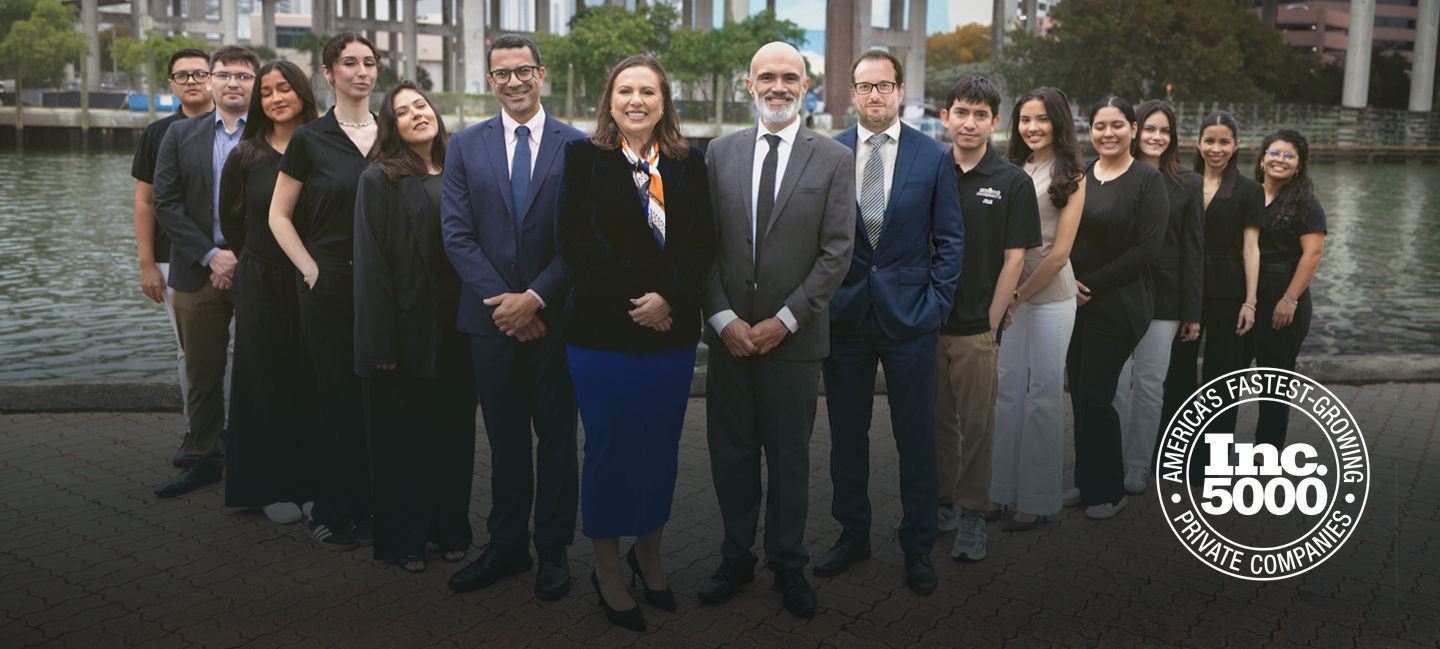
Our steady growth and dedication to our community is once again paying off. We are deeply proud to announce that, for the second consecutive time, the law firm Serving Immigrants has made the prestigious Inc. 5000 list, a recognition that highlights the fastest-growing and most successful private companies in the United States. In this edition, our organization ranked #1,215 among thousands of companies evaluated nationwide. This milestone is not just a corporate achievement; it reflects the hard work of our entire team and the trust that thousands of families have placed in us to protect their legal future. A Recognition of Excellence and Steady Growth Making the Inc. 5000 list requires demonstrating solid financial growth, sustainability, and a clear vision of the market. Ranking #1215 nationally reaffirms that our firm’s legal service model is setting a standard of excellence within the immigration sector. This positive result demonstrates that it is possible to scale an organization while maintaining a human touch and technical rigor. Furthermore,…Leer más

Proximity to our community and academic excellence are fundamental pillars for our firm. From July 22nd to 25th, attorney Magdalena Cuprys, along with our team at the Serving Immigrants law firm, was in New York City. During this busy visit, we provided personalized support to our community and participated in one of the most prestigious legal events in the corporate and immigration sector. In-Person Consultations and Personalized Service for the Community During our stay in the Big Apple, we organized a special series of in-person consultations to address our clients’ needs. Over the course of these four days, we provided a space for face-to-face meetings to evaluate complex cases and develop effective legal strategies. First, we had the valuable opportunity to meet new clients seeking reliable guidance on their visa processes, family petitions, and deportation defenses. We also met with clients who already have cases with us to review their progress and provide them with the peace of mind that comes from close support.…Leer más

The immigrant community across the country is celebrating a decision that is crucial for the future of thousands of families. Recently, the U.S. Supreme Court issued a historic ruling that definitively blocks the attempt to eliminate birthright citizenship in the United States. This measure sought to drastically change the rules of the game for children of undocumented parents or those with temporary visas. Therefore, it is essential to understand what this court ruling means and how it protects your children’s rights. The Supreme Court’s Historic Ruling on Citizenship In a 6-3 split decision, the nation’s highest court ruled that the executive order signed by President Donald Trump at the start of his second term was unlawful. The majority of justices determined that the administration’s proposal directly violated the 14th Amendment to the U.S. Constitution and its interpretation, which had been consistently upheld for over a century. This amendment establishes that nearly anyone born on U.S. soil is automatically a citizen. As a result, the executive…Leer más

Bringing your family to the United States is a very important step. However, immigration laws often raise many questions. Through family-based petitions, your loved ones may be able to obtain permanent residency, or a Green Card. In this article, we explain in simple terms who qualifies for this benefit and how the legal process works. Who Can Sponsor a Family Member in the United States? Not all immigration statuses allow you to sponsor a family member. Instead, the law reserves this right exclusively for two categories of people: U.S. Citizens: If you are over 21 years old, you can petition for the widest range of family members. In addition, your petitions for immediate relatives are not subject to annual visa caps, which avoids long waiting lists. Lawful Permanent Residents (LPRs): Green Card holders have more limited sponsorship rights. Furthermore, their relatives always fall into preference categories, so they must wait their turn according to the Visa Bulletin. Beneficiaries: Which family members can you sponsor? The…Leer más

Immigration enforcement operations in Florida continue to expand as state and federal authorities increase efforts to identify and detain individuals who lack legal immigration status. Recently, a large-scale operation conducted across South Florida resulted in the detention of 249 immigrants over a three-day period. The operation has raised concerns among immigrant communities throughout the state. Understanding how these enforcement efforts work is essential for individuals and families who may be affected by changing immigration policies. What Was Operation 9? Operation 9 was a joint enforcement effort involving more than 100 officers from multiple federal, state, and local agencies. Participants included the Florida Highway Patrol (FHP), U.S. Immigration and Customs Enforcement (ICE), U.S. Border Patrol, and several local law enforcement agencies. According to officials, the operation focused on identifying individuals who were unlawfully present in the United States. Over the course of three days, authorities detained 249 people, who were later transferred to ICE custody for further immigration processing. Additionally, officials stated that many of those…Leer más

The process of Adjustment of Status for a Green Card has become a major concern for thousands of immigrants across the United States in recent months. A new immigration directive had required most permanent residence applicants to leave the country to complete their process abroad. However, the government recently announced a partial modification that could benefit certain applicants. This change is important because it may help prevent family separation and employment disruptions for individuals seeking lawful permanent residence. What Changed in the Adjustment of Status for a Green Card Process? First, it is important to understand what the previous rule required. The original directive stated that most immigrants applying for a Green Card would need to return to their home country to complete the immigration process. This policy affected many individuals who were legally present in the United States through temporary visas, humanitarian programs, or other immigration benefits. As a result, many families worried about being separated for months or even years while their applications…Leer más

At Serving Immigrants, part of our mission is to keep the immigrant community informed with real and verified updates. That’s why we are thrilled to share that on May 6th, the 11th Circuit Court of Appeals issued a game-changing ruling in favor of the rights of detained immigrants. The decision rejects the 'mandatory detention' policy that sought to keep thousands of people behind bars without bail. What does this mean for you and your family? If a loved one is arrested by ICE in Florida, Georgia, or Alabama, they can no longer be detained indefinitely without a judicial review. The court has made it clear that living in this country and having ties here grants the fundamental right to a bond hearing before an immigration judge. This legal victory opens the door for many people to await their cases in freedom, surrounded by their loved ones, and not behind the walls of a detention center. The Justice Bloc: Other Circuits that support this decision This…Leer más
 ES
ES  EN
EN